
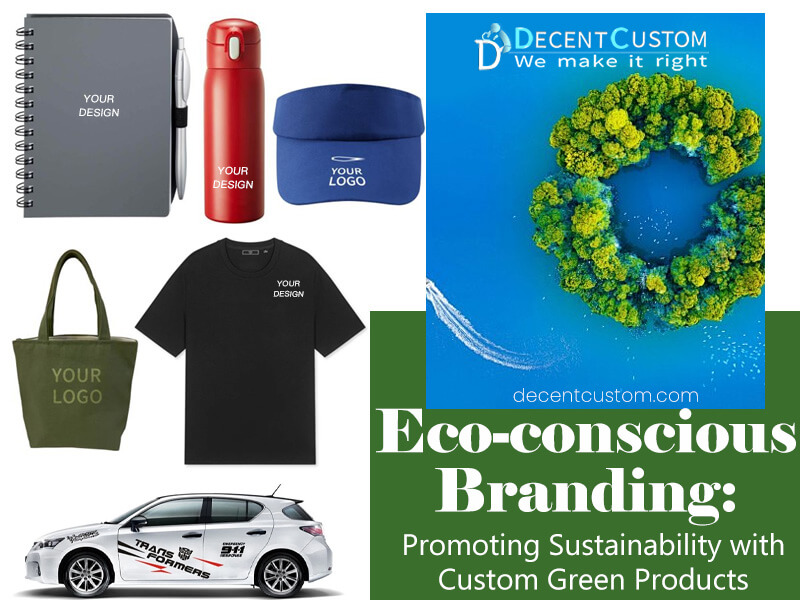
Eco-conscious Branding: Promoting Sustainability with Custom Green Products
In an era where environmental awareness is more than a trend but a necessity, the concept of eco-conscious branding has gained unparalleled momentum. As stewards of the planet, businesses are increasingly adopting green marketing strategies, not just as a corporate responsibility but as a cornerstone of their brand identity.
Sustainable Branding – Principles and Practices
Sustainable branding goes beyond mere environmental slogans. It embodies a philosophy where every aspect of a brand reflects a commitment to ecological stewardship. This involves a deep understanding of one’s environmental impact and a relentless pursuit to minimize it. Custom products, particularly those that are eco-friendly, play a pivotal role in this journey. Companies like Decentcustom, with their array of custom products, exemplify this commitment by offering options that align with sustainable values.
Green Marketing Strategies – Promoting Sustainability
Green marketing is not just about promoting products; it’s about a narrative that resonates with the eco-conscious consumer. This includes highlighting sustainability in every aspect, from product development to marketing. For instance, Custom Retractable Banners offer a powerful medium for brands to showcase their green initiatives at events and trade shows.
Community Engagement – Local Sustainability Initiatives
Local sustainability initiatives create a ripple effect in fostering an eco-conscious community. Engaging with local projects not only boosts brand image but also contributes to tangible environmental benefits. Community involvement can range from sponsoring local green events to participating in ecological restoration projects.
Packaging Innovations – Sustainable Packaging Options
The packaging is a crucial element in the consumer’s journey, often the first physical touchpoint with the product. Sustainable packaging, like biodegradable materials or reusable designs, significantly reduces environmental impact. It’s not just about wrapping a product; it’s about conveying a message of responsibility.
Product Lifecycle – Considerations for Sustainability
Understanding a product’s lifecycle is vital in minimizing its environmental footprint. This includes sourcing materials responsibly, ensuring efficient manufacturing processes, and considering the end-of-life of the product. Brands like Decentcustom, with their custom USBs, demonstrate how a product’s lifecycle can be aligned with sustainable practices.
Corporate Responsibility – The Role in Broader Environmental Efforts
Corporate responsibility in the context of sustainability is about businesses acknowledging their role in the broader environmental narrative. It’s not just about compliance but about leading the way in sustainable practices and setting new standards for the industry.
Looking Ahead: The Future of Eco-conscious Branding
As we look to the future, the trajectory of eco-conscious branding is only going to ascend. With advancing technology, evolving consumer preferences, and a growing emphasis on sustainability, brands will need to continuously innovate and adapt to maintain relevance and authenticity in their green endeavors.
In conclusion, the essence of eco-conscious branding lies in its ability to intertwine business success with environmental responsibility. Through innovative strategies like green marketing, community engagement, and a keen focus on every aspect of a product’s journey, brands can lead the way in shaping a sustainable future. It’s about building a legacy that goes beyond profits, one that nurtures the planet we all share.
FAQs on Eco-Conscious Branding
Q1: What is eco-conscious branding?
A: Eco-conscious branding refers to the practice of integrating sustainable principles into a brand’s identity, emphasizing environmental stewardship in every aspect of business operations.
Q2: Why are custom green products important for sustainability?
A: Custom green products reduce environmental impact through eco-friendly materials and processes, supporting a brand’s commitment to sustainability and resonating with eco-conscious consumers.
Q3: How does community engagement contribute to sustainability?
A: Community engagement in local sustainability initiatives amplifies the impact of eco-friendly practices, fostering a culture of environmental responsibility and enhancing brand image.
Q4: What role does packaging play in sustainable branding?
A: Sustainable packaging reduces waste and environmental impact, serving as a physical embodiment of a brand’s commitment to ecological stewardship.
Q5: How does understanding product lifecycle aid in sustainability?
A: Understanding a product’s lifecycle helps minimize its environmental impact through responsible sourcing, efficient manufacturing, and end-of-life considerations.