

Promoting Your Band with Custom Merchandise: Unlocking Success with Strategic Merchandising
You’ve probably noticed it yourself—bands are now making more money from selling merchandise than their actual music. It’s a shocking shift that highlights the growing potential of custom merch in music marketing. If you’re a musician, there’s no better way to connect with your fans and fuel your revenue streams than to get into the merch game. Let me take you on a journey of what I’ve learned firsthand as a musician, and how promotional items can become the lifeblood of your band’s brand.
The Real Power of Custom Merchandise
Picture this. You’re setting up for a gig at some intimate venue, and just as you’re getting ready to soundcheck, you spot someone wearing a custom t-shirt or hip-hop cap with your band’s name emblazoned across it. That’s the moment I knew custom merch was more than just stuff to sell—it’s a statement. Fans don’t just buy a t-shirt or hat; they buy into an experience. They carry your brand with them, and they feel like they’re part of something bigger.
It’s not just about making money, either. Sure, doubling the price from what it costs to produce is a good starting point for profit, but custom merch offers an invaluable way to build a long-term bond with your audience.
Crafting a Strong Digital Presence to Complement Your Merch
In this digital age, a band without a decent website is like a song without lyrics—empty and ineffective. Your site is your hub, the place where fans land when they’re ready to engage further with you. Combine that with some killer custom merchandise, and now you’re creating a powerful promotional mix that can drive fan loyalty and engagement.
The key is to keep your merchandise fresh. Update it yearly. Fans love new, unique items, and limited-edition drops create excitement and exclusivity, turning even a casual fan into a loyal one. It’s not just about merch being profitable—it’s about making people feel like they’re part of your band’s world.
Why Custom Merch Works for Building Brand Recognition
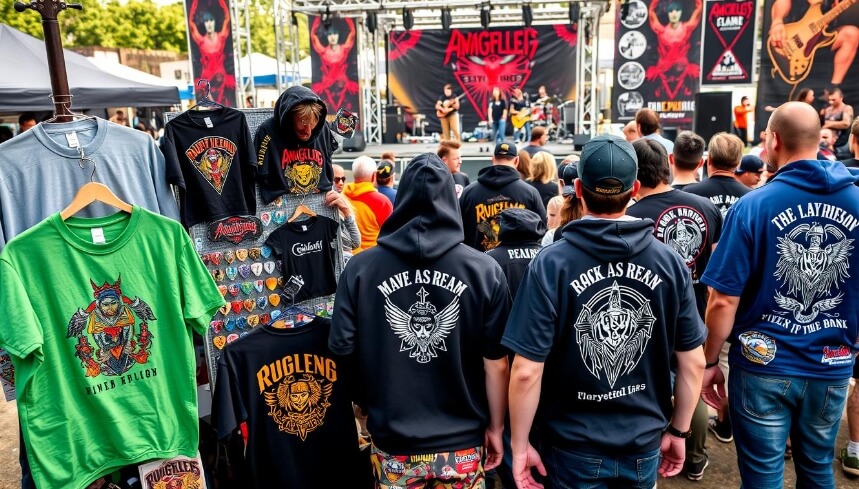
Merch helps bands reach wider audiences. Think about it—your fans are essentially walking billboards, spreading your name wherever they go. This phenomenon isn’t new either; since the 1940s, band t-shirts have been a staple of rock ‘n roll culture. Bands like Led Zeppelin and Pink Floyd were pioneers of this, and their merch has become just as iconic as their music.
But it’s not just about nostalgia. Modern bands like Slayer have made millions through merch sales during tours. If you need more proof of how well custom merch can work for you, take a look at those figures. Slayer made over $10 million during their farewell tour from merch alone. That’s not just a profit—it’s a game-changer.
More Than Just T-Shirts: Expanding Your Merch Arsenal
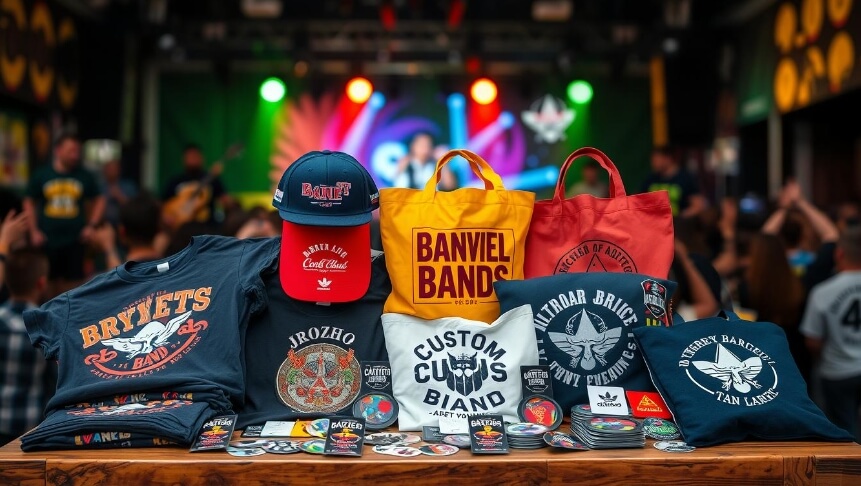
Yes, custom t-shirts are classic, but why stop there? The more diverse your merchandise, the broader your appeal. Patches, enamel pins, stickers, keychains—there’s something for everyone. You can also tap into eco-friendly trends by offering custom reusable bags or other sustainable products. Not only are you offering something useful, but you’re showing your fans that you care about the planet.
And don’t be afraid to get creative! Custom window decals, personalized items like signed posters, or even bundles that combine a t-shirt with an album can turn a simple purchase into an unforgettable experience.
Custom Merch Pricing: How to Stay Profitable
There’s a strategy behind pricing band merch, and it’s about more than just slapping a price tag on a t-shirt. Typically, you want to price your items at around double their production cost, which ensures you’re staying profitable while offering value to your fans. Some bands even use tiered pricing, offering basic and premium items to cater to different budgets.
Remember, offering limited-edition or exclusive items can create urgency and demand. Fans love to feel like they’ve got their hands on something rare.
Going Digital: How to Tap into the Virtual Merch World
The rise of the metaverse and virtual experiences means that digital merch is becoming a hot commodity. Things like downloadable sheet music, guitar tabs, and virtual lessons are not only easy to create but can be sold to fans across the globe, 24/7. This is the ultimate way to expand your merch line without worrying about inventory or shipping.
And let’s not forget blockchain technology, which is already allowing musicians to sell digital clothes and virtual merchandise to fans in the metaverse. It’s a brave new world out there, and digital merch is a key way to stay ahead of the curve.
Boosting Sales at Live Shows
Live shows are gold mines for merch sales. Why? Because fans are pumped up and already emotionally invested in the experience. Make your merch booth an extension of that vibe. Offer limited-edition items only available at shows to create urgency. And always, always have your staff trained to engage with fans—they should feel like they’re part of the family.
Social Media: Your Merch Promotion Powerhouse
It’s impossible to overstate how important social media is for promoting your custom merchandise. Platforms like Instagram and Twitter can give your merch the visual and viral boost it needs. I always make it a point to post photos of fans wearing our gear and use it as a marketing tool. Encouraging your fans to share their pics with your merch? That’s free advertising.
Facebook, with its targeted ads, is another platform where you can focus on higher-end items like personalized recordings or custom memorabilia.
The Future of Custom Merch: Where We’re Headed
The future of custom band merchandise is bright. We’re on the cusp of seeing augmented reality (AR) and artificial intelligence (AI) change the way fans interact with their favorite artists. Imagine creating an AR experience where fans can see a 3D version of your album cover come to life. This isn’t science fiction—it’s the next evolution of fan engagement.
With the right strategy, custom merchandise can become more than just another revenue stream—it’s a way to build a lasting connection with your audience, to turn casual listeners into die-hard fans. Your merch isn’t just something you sell; it’s a part of your band’s identity, and it’s how you can keep that connection alive long after the music fades.