
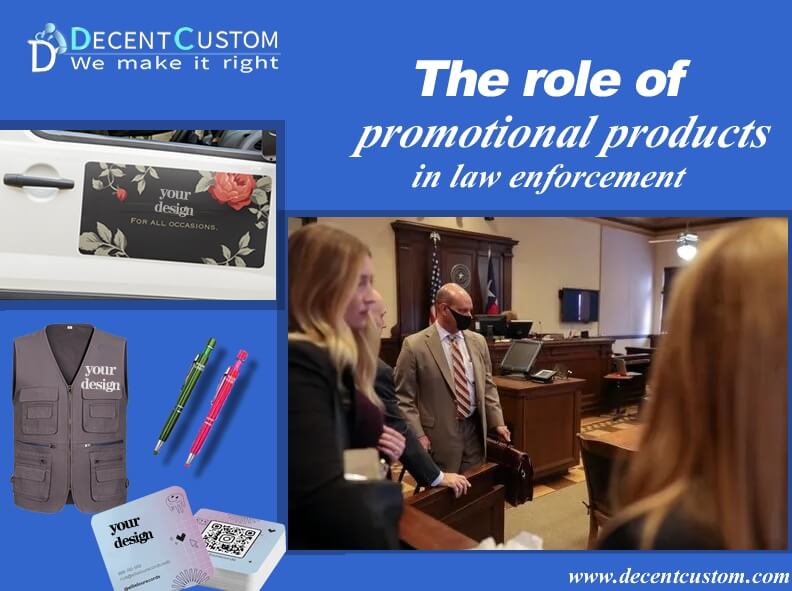
The Role of Promotional Products in Strengthening Law Enforcement and Community Ties
Think back to the last time you received a free promotional item—a pen, a keychain, or a water bottle with a logo. It might have seemed like a small, inconsequential gesture, but that little giveaway carries a lot of power. In law enforcement, where trust and community relationships are vital, promotional products can play a surprisingly large role. Let’s dive into how these branded items help foster stronger connections, build trust, and leave lasting impressions between police departments and the communities they serve.
Building Trust, One Badge at a Time
Imagine you’re at a local fair, kids running around excitedly as they spot a police booth handing out miniature police badges and toy cars. What might seem like a simple gesture is an essential tool in breaking down barriers. These interactions are far from ordinary—they humanize officers, making them approachable figures rather than just enforcers of the law.
Promotional products become tangible symbols of goodwill. According to studies, 72% of people are more likely to trust a brand after receiving a free item. In a time when public trust in law enforcement may be strained, even a small item like a badge can act as a conversation starter. And it’s not just about items for kids—promotional items like safety gear, brochures, and branded apparel handed out at community events help adults feel connected to their local police, too.
Promotional Products: A Long-Term Investment
Here’s a question for you: Why do these small promotional products make such a big difference? The answer is simple—they work. Promotional products have the power to significantly boost a department’s image and build long-term relationships with the community. Studies have shown that receiving a branded item leads to a 30% increase in loyalty. In law enforcement, this loyalty can translate into stronger community cooperation, more volunteers for neighborhood watch programs, and a higher turnout for community events.
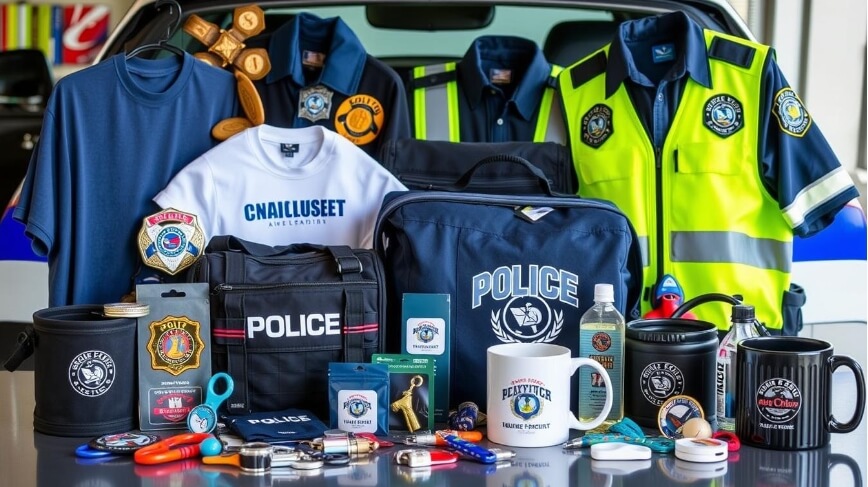
Promotional items are far from one-size-fits-all. Departments spend anywhere between $1.34 and $707.40 per item depending on what they choose to invest in. This might seem like a wide price range, but it allows agencies to tailor their promotional efforts to suit specific needs, from small events to city-wide campaigns. Whether it’s branded water bottles or custom safety vests, each item serves its purpose in building long-lasting community engagement.
Beyond Just Giveaways: Enhancing Public Relations
Promotional items don’t just foster goodwill; they help build solid public relations. Law enforcement agencies often participate in public safety meetings, school visits, and fairs. These occasions provide the perfect opportunity to give away branded items that leave a positive impression. Branded uniforms, for example, create a unified, professional image that shows the community that officers are both approachable and prepared.
Police officers handing out these items in person can strike up meaningful conversations, answer questions, and hear concerns. The merchandise itself becomes a symbol of those positive interactions. In a world where perception can be shaped in seconds, maintaining a consistent, positive image across various channels is crucial for police departments aiming to build a trustworthy reputation.
The Right Product for the Right Moment
Let’s get practical. Not every promotional product will work in every situation. It’s about finding the right balance between utility and message. For instance, custom vests or gloves show a commitment to safety, both for officers and the public. On the other hand, branded mugs or pens might work better for recruitment events or school visits.
And let’s not forget the importance of quality. High-quality items last longer, meaning the department’s logo or message sticks around in people’s daily lives. If you’ve ever owned a cheap pen that fell apart after a few uses, you’ll know that low-quality promotional products can sometimes do more harm than good. For law enforcement, choosing durable, thoughtful items is a small but powerful way to show the community that their safety and well-being are valued.
The Subtle Power of Brand Consistency
Consistency is key when it comes to branding. Just like how we associate the red and white logo of Coca-Cola with happiness and refreshment, a well-branded police department becomes a beacon of safety and trust. By sticking to consistent branding across all promotional items—whether it’s a logo on a notebook or a slogan on a hoodie—law enforcement can reinforce their identity in the minds of the public.
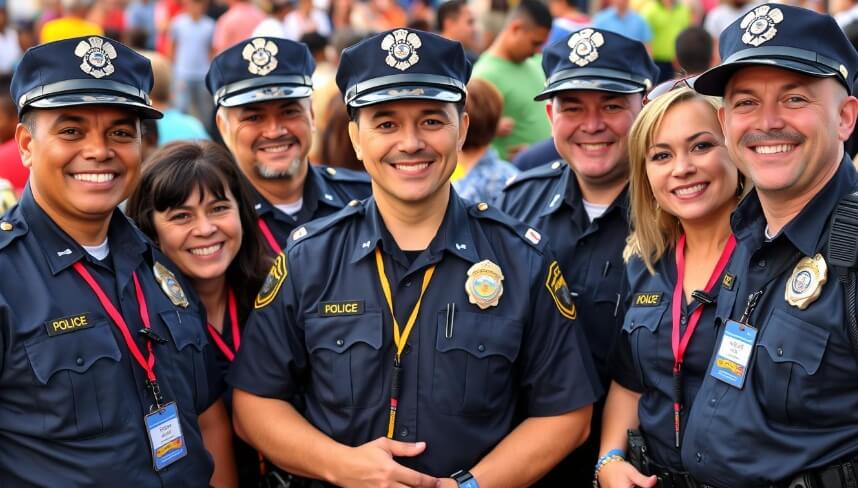
When every officer, from the chief to the rookie, is wearing a uniform that proudly displays the department’s values, it sends a unified message. It says, “We’re here for you. We’re one team, and you can trust us.”
Promotional Products: A Conversation Starter
Law enforcement isn’t just about enforcing the law—it’s about building relationships. Promotional products act as a gateway to those relationships. Officers can’t always knock on every door or sit down with every family, but a thoughtful giveaway can start a conversation that lasts longer than just one interaction. A police-branded tote bag used at the grocery store, or a reusable water bottle that accompanies someone to the gym, keeps the department’s presence felt even when officers aren’t around.
Officers themselves know how impactful these interactions can be. “I always keep extra stickers or pens in my car,” one officer said. “It’s incredible how such a small gesture can leave such a positive impression.”
Conclusion: The Bigger Picture
Promotional products aren’t just about logos and giveaways. They’re about building bridges. When law enforcement uses these tools effectively, they create long-lasting connections, show a commitment to safety, and remind the public that officers are there to serve and protect.
As law enforcement continues to find ways to engage with their communities, promotional products will remain a key part of that effort. And in a world where trust is more important than ever, even the smallest gesture can make the biggest difference.