
How Custom Political Merchandise Can Help You Win the Hearts of Voters
Imagine walking down a busy street, and all around you, people are wearing shirts, hats, and buttons with bold slogans that remind you of a political campaign. Some are subtle—a small pin on a lapel—while others are loud and proud, like a custom red hat that immediately brings a candidate’s entire platform to mind. It’s not just fashion; it’s personal. People don’t just wear political merchandise because it’s trendy—they wear it because it represents something they believe in. But how did this happen? And why are custom political campaign products so effective in connecting with voters?
The Undeniable Impact of Custom Merchandise in Elections
You might be surprised to learn that 72% of people keep their political merchandise, even when their candidate loses. That means these items—whether it’s a bumper sticker, a hat, or a tote bag—continue to live on long after the election is over, reinforcing a candidate’s message for years.
This trend was put on full display during the 2020 U.S. presidential campaign, where the demand for custom political gear skyrocketed. Custom merchandise became a powerful tool, not just for rallying voters but for building a recognizable and enduring political brand. And when I think back to the 2015 Trump campaign, it drove home the significance of these items. You couldn’t go anywhere without seeing those “Make America Great Again” hats. They weren’t just a fashion statement—they were a badge of loyalty, a symbol of the movement, and a constant reminder of what the campaign stood for.
What Makes Custom Campaign Merchandise So Effective?
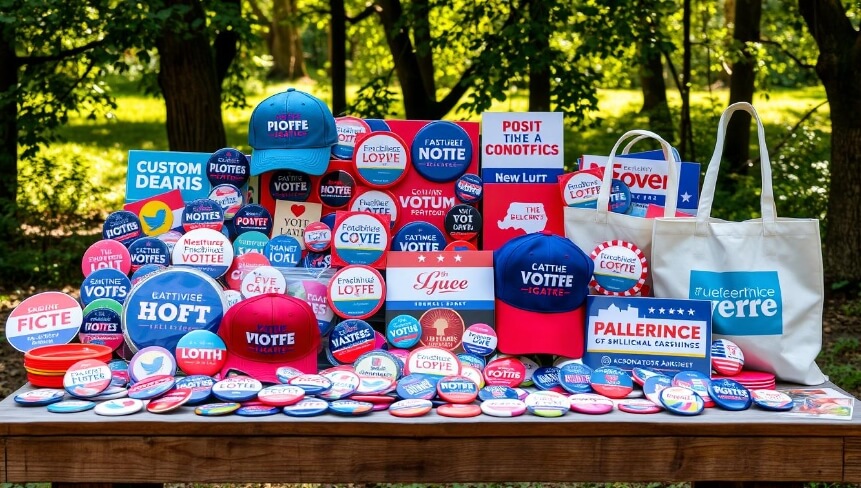
Custom political items are like billboards that voters willingly pay for and display. A custom hat, for example, turns a supporter into a walking advertisement. They are simple, powerful tools that resonate on a deeply personal level. A voter doesn’t just wear a candidate’s logo—they wear their values. And that is the magic of custom campaign merchandise: it builds a bridge between a candidate and their supporters that transcends the ballot box.
Let’s take the example of political buttons. Ever since George Washington’s 1789 campaign, buttons have been a small yet mighty way of making a statement. Remember the “Yes We Can” buttons from Barack Obama’s 2008 campaign? It wasn’t just a slogan—it was a shared hope that made voters feel like they were part of something bigger.
The Power of Political Hats: A Case Study
Speaking of hats, it’s hard to overlook the seismic impact of custom hats in political campaigns. The Trump campaign took this to new heights. The MAGA hats became an undeniable symbol of the campaign, with manufacturers scrambling to keep up with demand. People weren’t just buying these hats—they were collecting them, and wearing them proudly at rallies and in everyday life. It became a way to visibly align with a movement and its ideals.
Think about it: a hat can transform a casual supporter into an outspoken advocate. It becomes a part of their identity. It’s the equivalent of a fan wearing their favorite team’s jersey to a game, showing their loyalty and dedication for everyone to see. But in this case, it’s a political message they’re broadcasting.
Connecting on a Deeper Level: The Personal Touch of Campaign Swag
In the 2016 election cycle, Trump and Bernie Sanders both invested heavily in custom merchandise—Trump reportedly spent $3.3 million on items like hats, while Sanders’ campaign shelled out an even larger $7.5 million. These numbers aren’t just interesting—they’re a reflection of how much value campaigns place on connecting with their base through these tangible items.
Why? Because these items make people feel connected. Personalized campaign swag can transform a voter from a passive observer into an active participant. It’s a simple psychological shift: when you’re wearing a candidate’s button or carrying their tote bag, you become a part of the team. You’re in the game now.
Creating Campaign Loyalty Through Swag
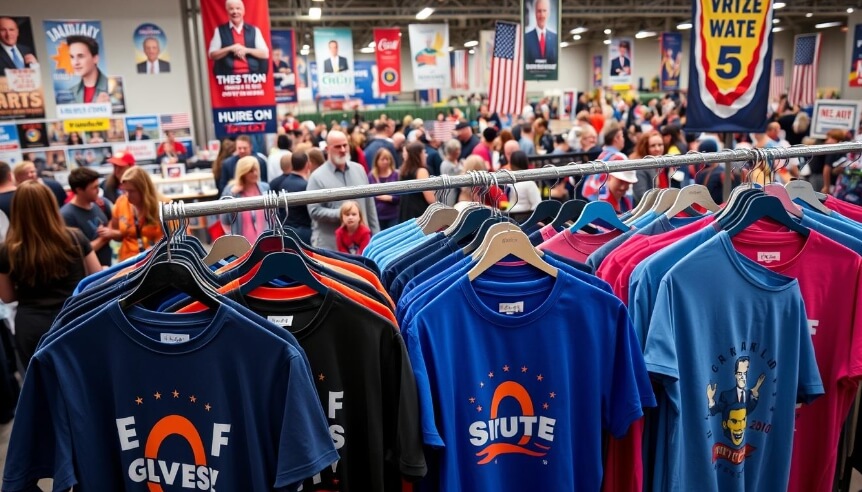
Campaign swag is also an important way to foster long-term loyalty. When people purchase campaign gear, they become financially invested. They’ve contributed, and now they want to see the campaign succeed even more. It’s a win-win: not only does the campaign raise money, but it also deepens their supporters’ emotional connection.
For example, custom t-shirts, hats, and even buttons can become collectibles. And in the digital age, supporters are quick to post pictures of themselves in campaign gear on social media, amplifying the reach of the message even further. This kind of organic promotion is priceless.
The Era of Sustainable and Green Merchandise
What’s next for political merchandise? Well, it’s not just about hats and t-shirts anymore. With an increasing focus on sustainability, campaigns are looking to incorporate eco-friendly materials into their merch. Imagine custom reusable water bottles or tote bags made from recycled materials, each emblazoned with a candidate’s logo and slogan. These items appeal not only to environmentally-conscious voters but also reflect the values of a campaign committed to sustainability.
The future of political merchandise is about more than just visibility—it’s about aligning with the values that voters care about. Whether it’s using organic cotton or developing more personalized, tech-savvy products, campaigns that stay ahead of the curve will see stronger connections with their supporters.
Final Thoughts: Making Merchandise Work for Your Campaign
At the end of the day, custom political merchandise is more than just a tool for branding—it’s a powerful way to connect on a personal level with voters. Whether it’s through hats, buttons, or eco-friendly water bottles, these items build loyalty, raise awareness, and turn passive supporters into active participants in the political process.
So, the next time you think of a political campaign, remember: sometimes the biggest impact comes in the smallest, most wearable forms.