
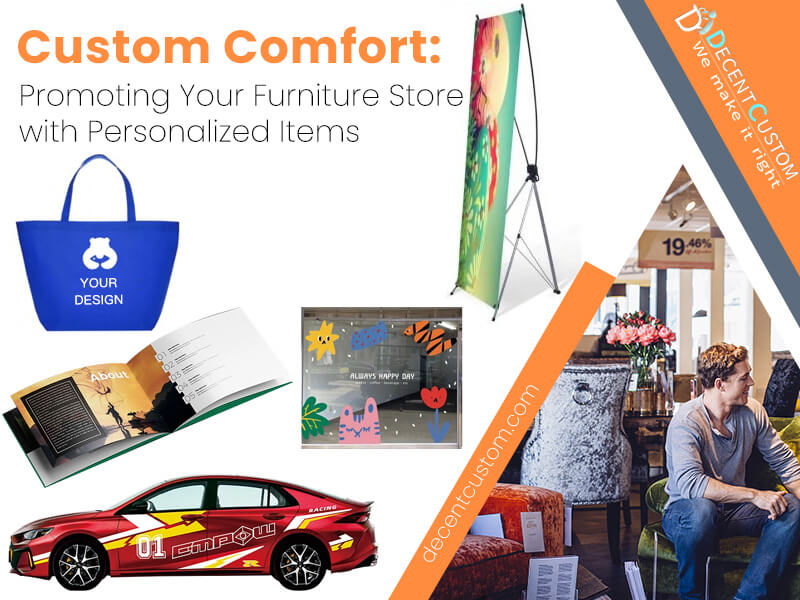
Custom Comfort: Promoting Your Furniture Store with Personalized Items
Introduction: The Era of Personalization in Furniture Retail
In today’s fast-paced world, personalization is not just a trend but a business necessity, especially in the furniture retail industry. This comprehensive guide dives deep into the role of custom products in transforming furniture stores, offering industry insights, detailed experiences, and practical strategies for leveraging personalization.
Benefits of Using Custom Products for Furniture Store Promotion
Custom products serve as a powerful tool in distinguishing your furniture store in a competitive market. This section explores how personalized items like promotional products can elevate a store’s brand and create a unique identity.
Examples of Effective Personalized Items for Furniture Stores
From custom wall decals enhancing store aesthetics to large window clings for business attracting passersby, this segment showcases various custom items that can effectively market a furniture store.
Collaborations with Local Artists and Designers for Unique Items
Partnering with local artists and designers brings an exclusive edge to your inventory. This part highlights successful collaborations that have resulted in unique furniture items, contributing to a store’s uniqueness and appeal.
Customer Engagement Through Personalized Shopping Experiences
Offering personalized shopping experiences can significantly enhance customer loyalty. This section discusses strategies for engaging customers through tailored services and custom product offerings.
Hosting Events Featuring Custom Furniture Items
Organizing events that showcase custom furniture can be a game-changer for store promotion. This chapter provides insights into planning and executing successful events that highlight personalized furniture items.
Analyzing Customer Feedback to Improve Custom Product Offerings
Understanding customer preferences is crucial for refining a store’s custom product range. This part covers effective methods for collecting and analyzing customer feedback to improve product offerings.
Looking Ahead: The Future of Customization in Furniture Retail
The furniture retail industry is constantly evolving, and customization plays a key role in its future. This forward-looking section explores emerging trends and how furniture stores can adapt to stay ahead.
Case Study 1: Revolutionizing Store Design with Custom Wall Decals
A case study showcasing a store that used custom wall decals to transform its interior. The decals not only enhanced the store’s ambiance but also attracted a younger demographic, boosting sales.
Case Study 2: Enhancing Customer Experience with Large Window Clings
Another example involves a store that implemented large window clings for business, creating an inviting window display that increased foot traffic and customer engagement.
Conclusion: Crafting a Unique Identity with Customization
In conclusion, embracing customization is key to creating a unique identity for furniture stores. By effectively using custom products, engaging with customers, and staying ahead of trends, stores can achieve greater brand recognition and success.
FAQs: Everything You Need to Know
How do custom products enhance a furniture store’s brand image?
Custom products allow stores to offer unique experiences, fostering brand loyalty and creating a memorable brand image.
Can small furniture stores benefit from custom products?
Absolutely. Custom products offer a way for smaller stores to differentiate themselves and compete with larger chains.
What are the challenges of integrating custom products into a furniture store?
Challenges include selecting the right products, managing inventory, and effectively marketing these unique offerings.
How can furniture stores effectively market their custom products?
Through targeted marketing campaigns, social media engagement, and hosting in-store events showcasing these products.
What’s the best way to measure the success of custom products in a store?
Success can be measured through customer feedback, sales data, and the level of engagement in promotional activities.