
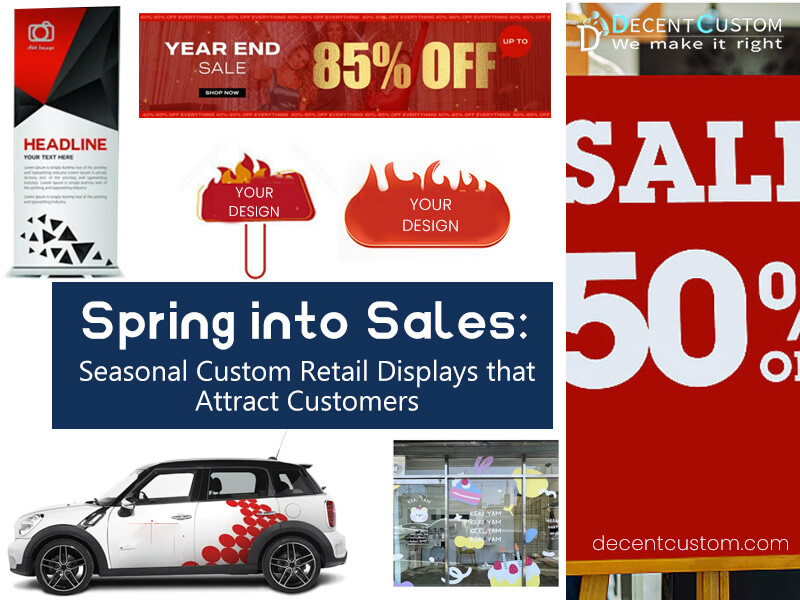
Spring into Sales: Seasonal Custom Retail Displays that Attract Customers
Introduction
Welcome to our guide on leveraging custom retail displays to maximize your spring sales! As the seasons change, so do consumer behaviors and preferences. Retailers must adapt their marketing strategies accordingly, and one effective way to do so is through custom spring displays. In this article, we’ll delve into the importance of seasonal marketing, the impact of custom displays, and strategies for planning, implementing, and measuring the success of your spring displays.
The Importance of Seasonal Custom Retail Displays
Understanding Consumer Psychology
Seasonal changes have a profound effect on consumer behavior. As spring arrives, people are eager to shake off the winter blues and embrace the freshness and renewal that comes with the season. Custom retail displays play a pivotal role in creating a thematic shopping experience that resonates with consumers’ desires and aspirations during this time. By tapping into the psychological associations of spring—such as growth, rejuvenation, and vibrancy—retailers can captivate their audience and drive engagement and sales.
Planning Your Spring Retail Display
Crafting an Immersive Experience
Designing an effective spring display requires careful planning and attention to detail. Start by selecting a color scheme and theme that reflects the essence of spring—think pastel hues, blooming flowers, and lush greenery. Incorporate elements of nature into your display, such as potted plants, floral arrangements, and seasonal props, to evoke the sights and scents of springtime. Additionally, ensure that your display aligns with your brand identity and messaging to maintain consistency and reinforce brand recall.
Successful Elements of Spring Retail Displays
Drawing Inspiration from Success Stories
Case studies of successful spring retail displays offer valuable insights into what works and what doesn’t. Key components that contribute to the effectiveness of these displays include interactivity, visual appeal, and relevance to the target audience. By studying these success stories, retailers can glean actionable strategies and best practices to apply to their spring displays. Remember, every display is an opportunity to learn and improve, so don’t be afraid to experiment and iterate based on feedback and performance data.
Engaging Customers with Interactive Displays
Creating Memorable Experiences
Interactive displays are a powerful tool for engaging customers and fostering meaningful connections with your brand. Incorporate elements such as QR codes for exclusive deals, interactive screens for product demonstrations, and gamification techniques to encourage participation and interaction. By providing value-added experiences beyond traditional shopping, retailers can enhance the customer experience, drive foot traffic, and ultimately increase sales.
Marketing Your Spring Displays
Amplifying Your Reach
Once your spring displays are in place, it’s essential to promote them effectively to maximize their impact. Leverage a mix of online and offline marketing channels, including social media, email marketing, and in-store signage, to generate buzz and drive traffic to your store. Create compelling content that showcases your spring displays in action, highlighting key features, promotions, and benefits to entice customers to visit and make a purchase.
Measuring the Success of Your Spring Displays
Tracking Key Performance Indicators
To gauge the effectiveness of your spring retail displays, it’s essential to track key performance indicators (KPIs) such as foot traffic, conversion rate, and average transaction value. Use tools and methods such as foot traffic counters, POS systems, and customer surveys to gather data on customer engagement and sales performance. Analyze this data to identify trends, patterns, and areas for improvement, and use it to refine your future seasonal displays for even greater success.
Case Studies
Case Study 1: Boutique’s Blooming Success
In 2023, a boutique retailer implemented a custom spring display featuring vibrant floral arrangements, pastel-colored props, and interactive touch screens showcasing their latest collection. The display quickly became a social media sensation, with customers sharing photos and videos of the immersive experience online. As a result, foot traffic to the store increased by 30%, and sales soared by 25% compared to the previous year. The retailer’s brand visibility also received a significant boost, leading to increased customer loyalty and word-of-mouth referrals.
Case Study 2: Interactive Innovation at a Tech Retailer
In 2023, a tech retailer introduced an innovative spring display featuring interactive elements such as augmented reality (AR) product demos and personalized QR code experiences. Customers were invited to scan QR codes to unlock exclusive spring deals and discounts, creating a sense of excitement and engagement. The interactive nature of the display not only drove foot traffic to the store but also encouraged repeat visits as customers returned to explore new offers and experiences. As a result, the retailer saw a 20% increase in sales and a 15% boost in customer retention, solidifying their reputation as a leader in retail innovation.
Conclusion
Custom retail displays play a vital role in attracting customers, driving sales, and enhancing the overall shopping experience. By embracing seasonal marketing strategies, designing immersive displays, engaging customers with interactive elements, and measuring success through data-driven insights, retailers can stay ahead of the competition and capitalize on the seasonal shopping frenzy. With creativity, innovation, and a customer-centric approach, the possibilities for custom retail displays are endless.
Looking Ahead
Looking ahead, the future of custom retail displays is bright and full of possibilities. As technology continues to evolve and consumer expectations evolve, retailers can expect to see even more innovative and immersive displays in the years to come. By staying informed about emerging trends and embracing experimentation and creativity, retailers can continue to delight customers and drive sales through their custom retail displays.
FAQ
Q: How can I design an effective spring retail display?
A: Start by selecting a theme and color scheme that reflects the essence of spring, then incorporate elements such as flowers, greenery, and seasonal props to create an immersive experience that resonates with your audience.
Q: What are some examples of successful spring retail displays?
A: Successful spring retail displays often include interactivity, visual appeal, and relevance to the target audience. Examples include displays featuring QR codes for exclusive deals, interactive screens for product demonstrations, and gamification techniques to encourage participation.
Q: How can I promote my spring displays effectively?
A: Leverage a mix of online and offline marketing channels, including social media, email marketing, and in-store signage, to generate buzz and drive traffic to your store. Create compelling content that showcases your spring displays and highlights key features and promotions.
Q: What KPIs should I track to measure the success of my spring displays?
A: Key performance indicators (KPIs) to track include foot traffic, conversion rate, and average transaction value. Use tools such as foot traffic counters, POS systems, and customer surveys to gather data on customer engagement and sales performance.
Q: How can I use data to refine future seasonal displays?
A: Analyze data on customer engagement and sales performance to identify trends, patterns, and areas for improvement. Use this data to inform your decisions and refine your future seasonal displays for even greater success.